
 Pin This
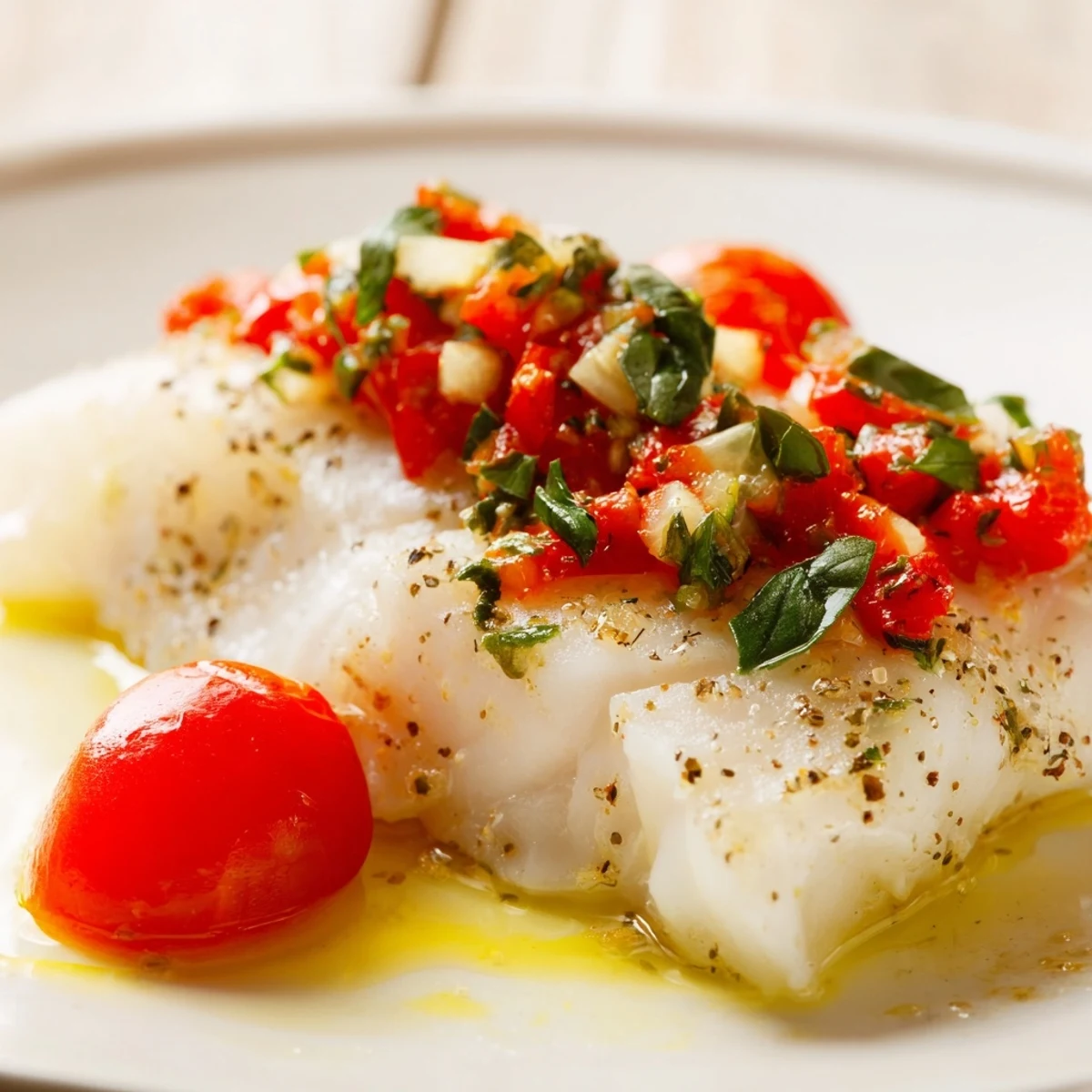
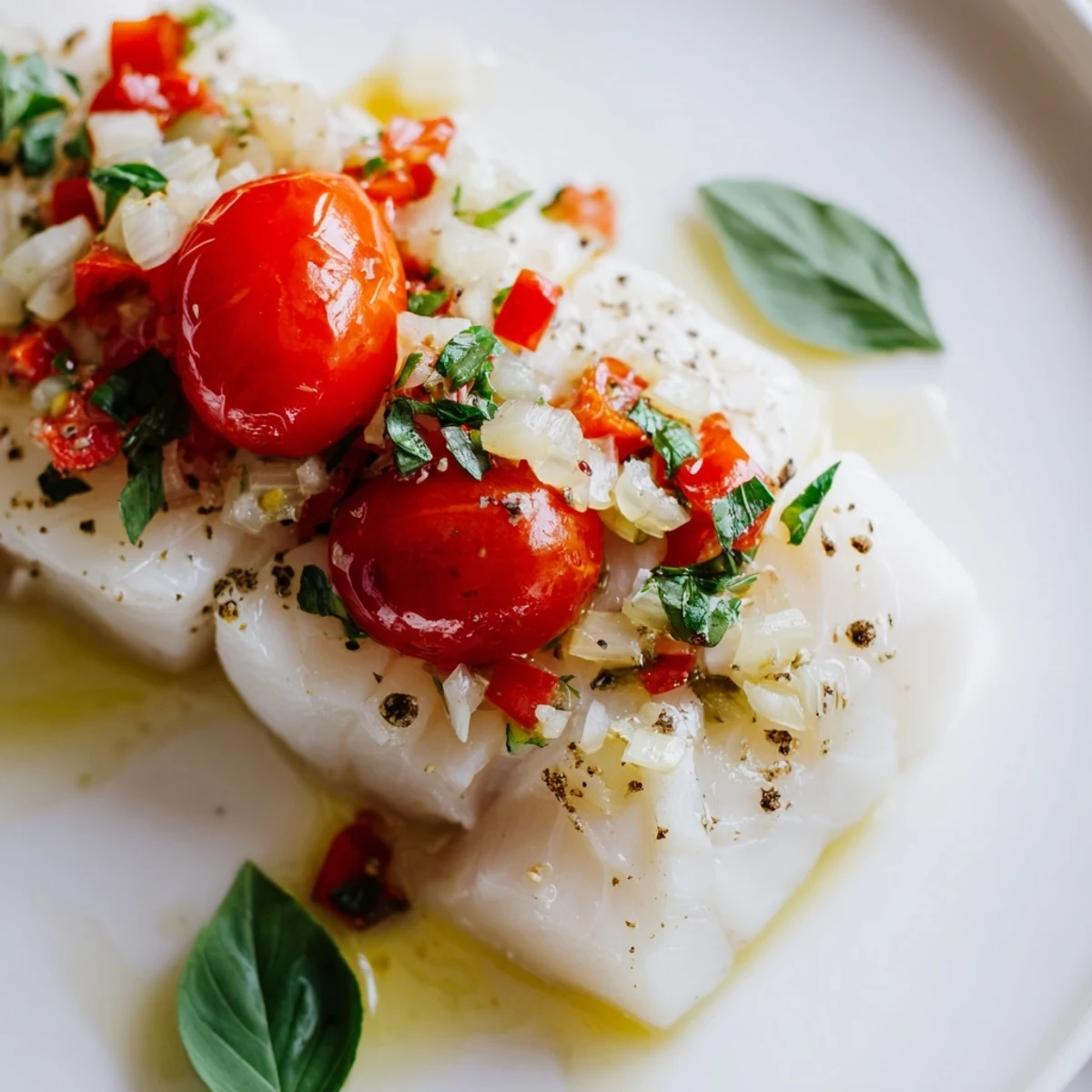
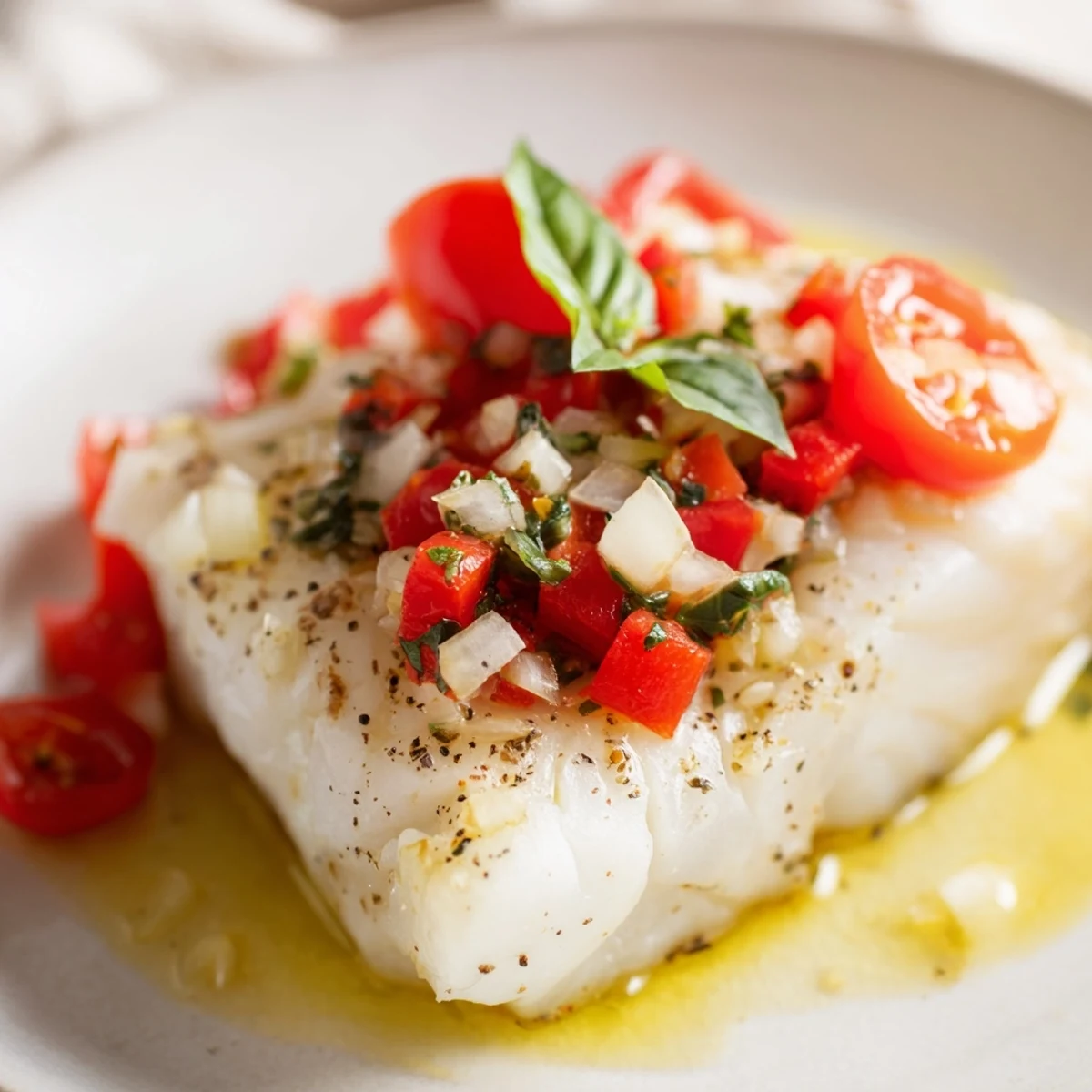
 This dish features succulent halibut fillets baked to a tender finish and garnished with a bright and tangy fresh tomato and basil relish. The fish is lightly seasoned with lemon zest, juice, and olive oil before baking, ensuring moist, flaky results. The relish combines ripe cherry tomatoes, fresh basil, shallots, garlic, and a splash of red wine vinegar for a refreshing contrast. Ideal for an easy, light Mediterranean-inspired main course that balances freshness with subtle seasoning.
Last summer, I stood at the fish counter on a Tuesday afternoon with no dinner plan, and the halibut caught my eye—pale, pristine, almost glowing under the market lights. I bought four fillets on impulse and grabbed the most fragrant basil I could find, remembering a friend who'd mentioned that the best meals often come from the simplest decisions. That night, with tomatoes at their peak and lemon trees heavy with fruit, I made this dish for the first time, and it became the answer to every question about what to cook when you want something both elegant and effortless.
I remember making this for my partner on an evening when we both felt like we needed something that didn't require apologies for cutting corners. The kitchen filled with the smell of roasting fish and fresh basil, and by the time we sat down, the stress of the day had somehow melted away with each bite. It became our go-to for those nights when we wanted to feel taken care of without the theatre.
Ingredients
- Halibut fillets: Look for fillets that are thick and firm, not translucent or mushy—the thickness is what keeps them from drying out during baking.
- Olive oil: Use a decent quality oil for the fish; save your fanciest extra-virgin for the relish where you can actually taste it.
- Lemon: Fresh and bright, because bottled juice will betray you every time—the zest and juice both matter here.
- Sea salt and black pepper: Coarse salt if you have it; you want to taste the seasoning, not feel it.
- Cherry tomatoes: Pick ones that are actually ripe and smell fragrant; pale supermarket tomatoes will make you regret everything.
- Fresh basil: Tear or chop it by hand rather than using a knife if you can—bruising matters with basil, and it's worth the extra thirty seconds.
- Shallot and garlic: Finely diced so they dissolve into the relish rather than announcing themselves in every bite.
- Red wine vinegar: This is the secret acid that makes the relish sing; don't skip it or substitute with something milder.
Instructions
- Heat your oven and prepare:
- Get the oven to 400°F and line a baking sheet with parchment—this is non-negotiable if you want the fish to release cleanly without sticking. It takes two minutes and saves you from the heartbreak of a torn fillet.
- Dry and arrange the fish:
- Pat those fillets completely dry with paper towels, because any moisture is steam waiting to happen, and steam is the enemy of a golden, delicate surface. Lay them out with a little space between each one so the heat can circulate.
- Season and drizzle:
- Pour the olive oil over each fillet, squeeze that lemon juice, scatter the zest, then season generously with salt and pepper. The oil should glisten, and you should smell the lemon immediately.
- Bake until just opaque:
- Set a timer for 12 to 15 minutes—the fish is done when it's still barely translucent at the thickest part and flakes with the gentlest pressure of a fork. Overcooked halibut is a tragedy.
- Make the relish while the fish cooks:
- In a bowl, combine the quartered tomatoes, fresh basil, shallot, minced garlic, olive oil, and red wine vinegar. Season to taste and toss gently so everything mingles but the tomatoes don't collapse into mush.
- Plate and serve:
- Transfer the warm fish to plates and spoon the relish generously over each fillet, letting the juices pool around it. Serve immediately while everything is still bright and warm.
 Pin This
 There was a moment, sitting across from someone I cared about, when I realized this dish had become more than dinner. It was a conversation without words, proof that simple and special aren't opposites. That's when I knew I'd keep making this, again and again, whenever I wanted to say something like 'you matter' without actually saying it.
Why Fresh Matters Here
This dish lives and dies by the quality of what you start with. There's nowhere for mediocre ingredients to hide when everything is so simple and clean. I learned this the hard way, buying whatever tomatoes were on sale and wondering why the result felt flat and forgettable. Now I hunt for tomatoes with actual flavor, basil that smells like summer, and fish that looks like it was caught yesterday.
Timing and Temperature
The secret is that both components—the fish and the relish—need to work in conversation. The heat of the fish should bring out something new in the cool, bright relish, and the acidity of the tomatoes should cut through the richness of the fish's oils. This balance only happens when you respect the timing and don't rush to plate too early or too late. It's a small dance, but it matters.
Variations and Pairings
Once you master the basic version, you start seeing possibilities everywhere. A pinch of crushed red pepper flakes in the relish adds a whisper of heat. Flat-leaf parsley works beautifully if basil isn't available. Serve it alongside roasted asparagus, fluffy quinoa, or simply a bright green salad, and each pairing tells a slightly different story of the same meal.
- A crisp Sauvignon Blanc or Pinot Grigio beside this dish is like the perfect ending to a sentence you didn't finish.
- If you want to add richness, a drizzle of really good olive oil at the very end never hurt anyone.
- Make extra relish and use it on grilled vegetables, chicken, or even crusty bread the next day.
 Pin This
 This is the kind of meal that reminds you why cooking matters, why feeding yourself and the people you love is an act of presence. Make it often.
Recipe FAQs
- → How can I tell when the halibut is cooked perfectly?
-
Halibut is done when it turns opaque and flakes easily with a fork, usually after 12-15 minutes baking at 400°F.
- → Can I prepare the tomato and basil relish ahead of time?
-
Yes, the relish can be mixed a few hours in advance and refrigerated to allow flavors to meld before serving.
- → What can I substitute for basil in the relish?
-
Flat-leaf parsley works well as a fresh herb alternative if basil is unavailable.
- → Is it possible to add some heat to the relish?
-
Adding a pinch of crushed red pepper flakes will introduce a gentle spicy kick to the relish.
- → What sides pair well with baked halibut and tomato basil relish?
-
Roasted asparagus, quinoa, or a green salad complement this dish nicely and maintain its light character.