
 Pin This
 This velvety dish combines fresh mushrooms gently sautéed with aromatic thyme and finished with rich cream for a smooth texture. Slow simmering enhances deep flavors, while careful seasoning balances the taste. Ideal for cozy evenings or as an elegant starter, its simple preparation involves sautéing vegetables, simmering with herbs, and blending before adding the luscious cream. Optional white wine adds a subtle depth, and fresh thyme garnishes provide a fragrant touch for presentation.
There's something almost magical about the way mushrooms transform in a hot pan—one moment they're firm and pale, the next they're releasing all their earthiness into butter that turns golden and fragrant. I discovered this soup years ago on a rainy autumn evening when I had nothing in the kitchen but mushrooms, cream, and the stub of a thyme plant on my windowsill. What started as an attempt to use up ingredients before they wilted became the dish I now make whenever I need comfort wrapped in a bowl.
I made this for my partner on our first winter together in a drafty apartment, and the smell of thyme and butter actually convinced him the place felt warm. We sat at that tiny kitchen table with bowls steaming between us, and he asked for the recipe before he'd even finished the first spoonful—which, in retrospect, was probably when I knew.
Ingredients
- Fresh mushrooms (cremini or button), 500 g, sliced: These are your foundation—cremini mushrooms have more flavor than regular buttons, but buttons work beautifully if that's what you have. Slice them thick enough to hold their shape during cooking.
- Unsalted butter, 2 tbsp: The medium is just as important as the message here; butter carries the flavor of the garlic and mushrooms in a way oil can't quite manage.
- Medium onion, finely chopped: Don't skip the rough chop and cook—it builds the flavor base that everything else will rest on.
- Garlic, 2 cloves, minced: Mince it small and add it after the onions soften, or it'll burn and turn bitter on you.
- Celery stalk, finely chopped: A small gesture toward depth; it adds a whisper of sweetness and body that you won't quite identify but will definitely notice if it's missing.
- Vegetable stock, 750 ml: Use good stock—the kind with actual flavor, not the sad, salty kind that comes in a tiny cube.
- Dry white wine, 60 ml (optional): If you have it, use it; if not, don't worry, the soup is already perfect without it.
- Heavy cream, 200 ml: This is what makes the soup luxurious and smooth; it's the final note that ties everything together.
- Fresh thyme leaves, 2 tsp, plus extra for garnish: Strip the leaves from the stems with your fingers and scatter them in; the fresh herb keeps the soup from tasting heavy.
- Bay leaf, 1: It seasons quietly in the background and should be removed before blending.
- Salt and freshly ground black pepper, to taste: Season at the end, when you can actually taste what you're building.
Instructions
- Melt butter and soften the vegetables:
- Set a large pot over medium heat and let the butter melt into a gentle foam. Add your chopped onions and celery, and let them soften for about 3 to 4 minutes—you want them yielding and fragrant, not browned. Stir occasionally so they release their sweetness evenly.
- Wake up the garlic:
- Once the onions are soft, stir in your minced garlic and cook for just a minute until the smell makes you pause and breathe it in. This brief cooking mellows the garlic without letting it burn.
- Cook the mushrooms until golden:
- Add your sliced mushrooms to the pot and give everything a good stir. Let them cook for 8 to 10 minutes, stirring now and then, until they've released their moisture and turned a deep golden brown—this is where all the flavor develops.
- Deglaze with wine (if using):
- Pour in the white wine and let it bubble for about 2 minutes, scraping up any browned bits stuck to the bottom of the pot. These bits are flavor gold.
- Build the broth:
- Add your vegetable stock, thyme leaves, and bay leaf, then bring everything to a gentle boil before turning the heat down to a simmer. Let it bubble quietly for 15 minutes so the thyme can infuse the entire pot.
- Blend it smooth:
- Fish out the bay leaf, then use an immersion blender to purée the soup until it's silky and smooth—or leave it a little chunky if you prefer texture. Work the blender slowly at first so hot soup doesn't splash.
- Finish with cream:
- Stir in the heavy cream and let everything warm together for 2 to 3 minutes over low heat, never letting it boil or the cream might separate. Taste and season with salt and pepper until it's exactly right.
- Serve and garnish:
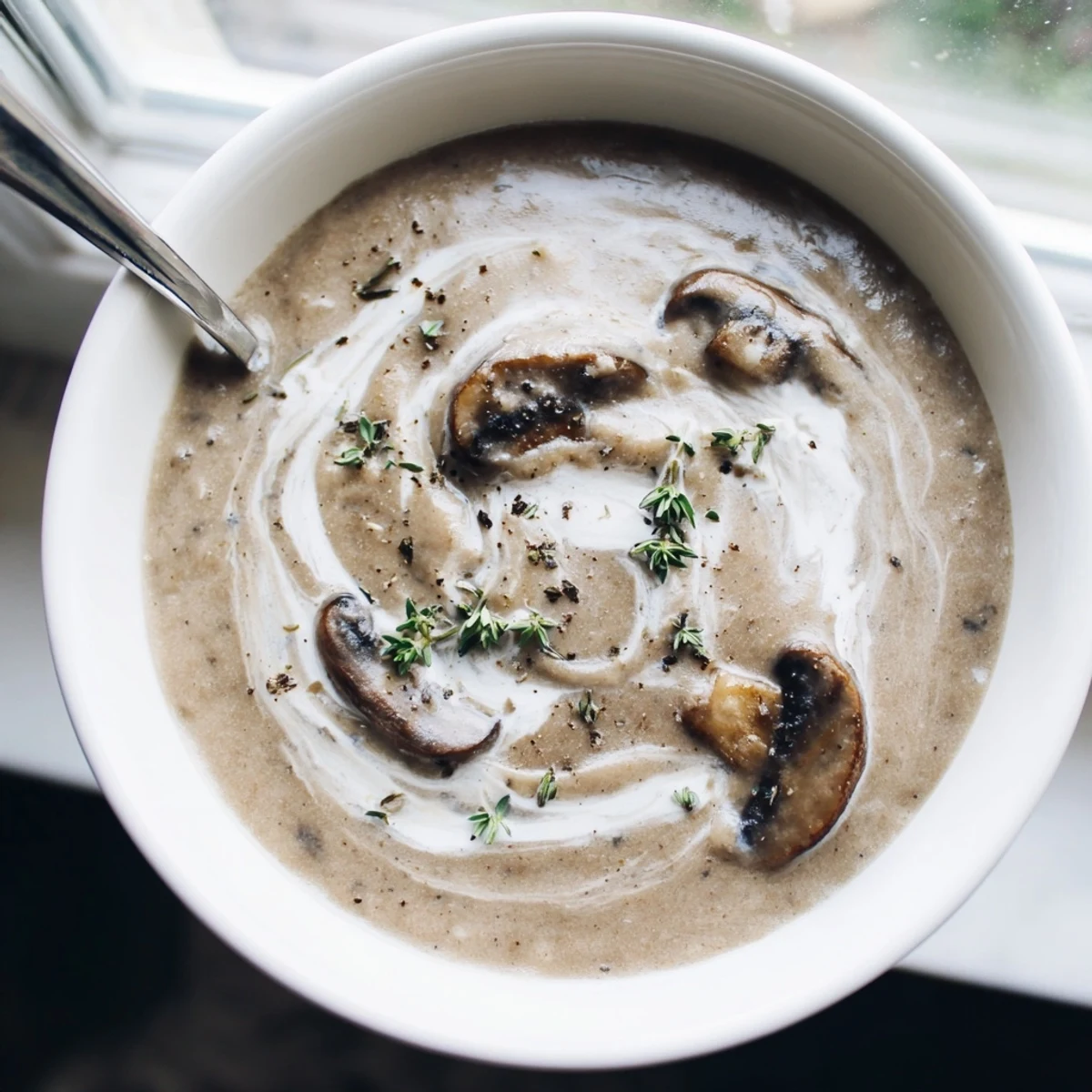
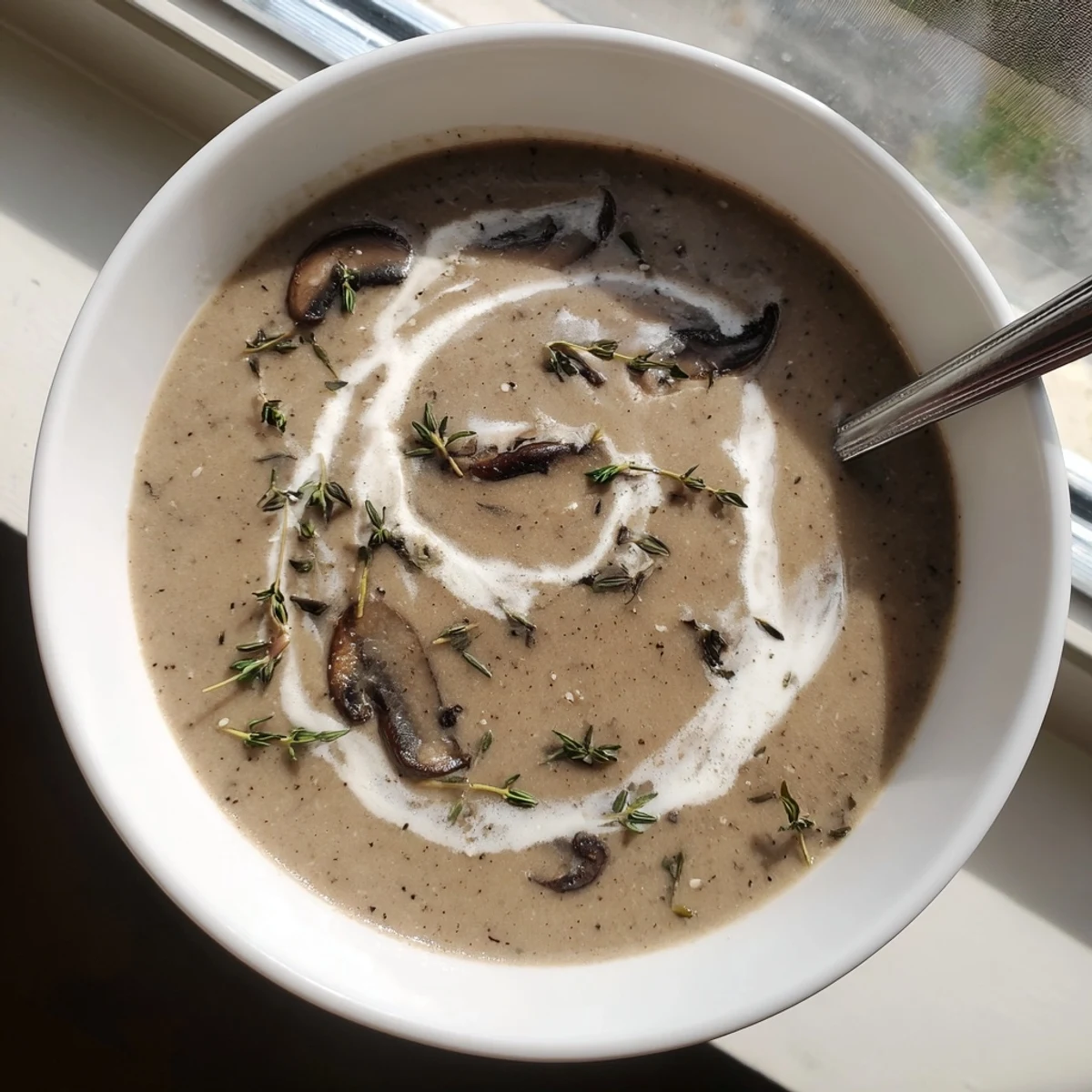
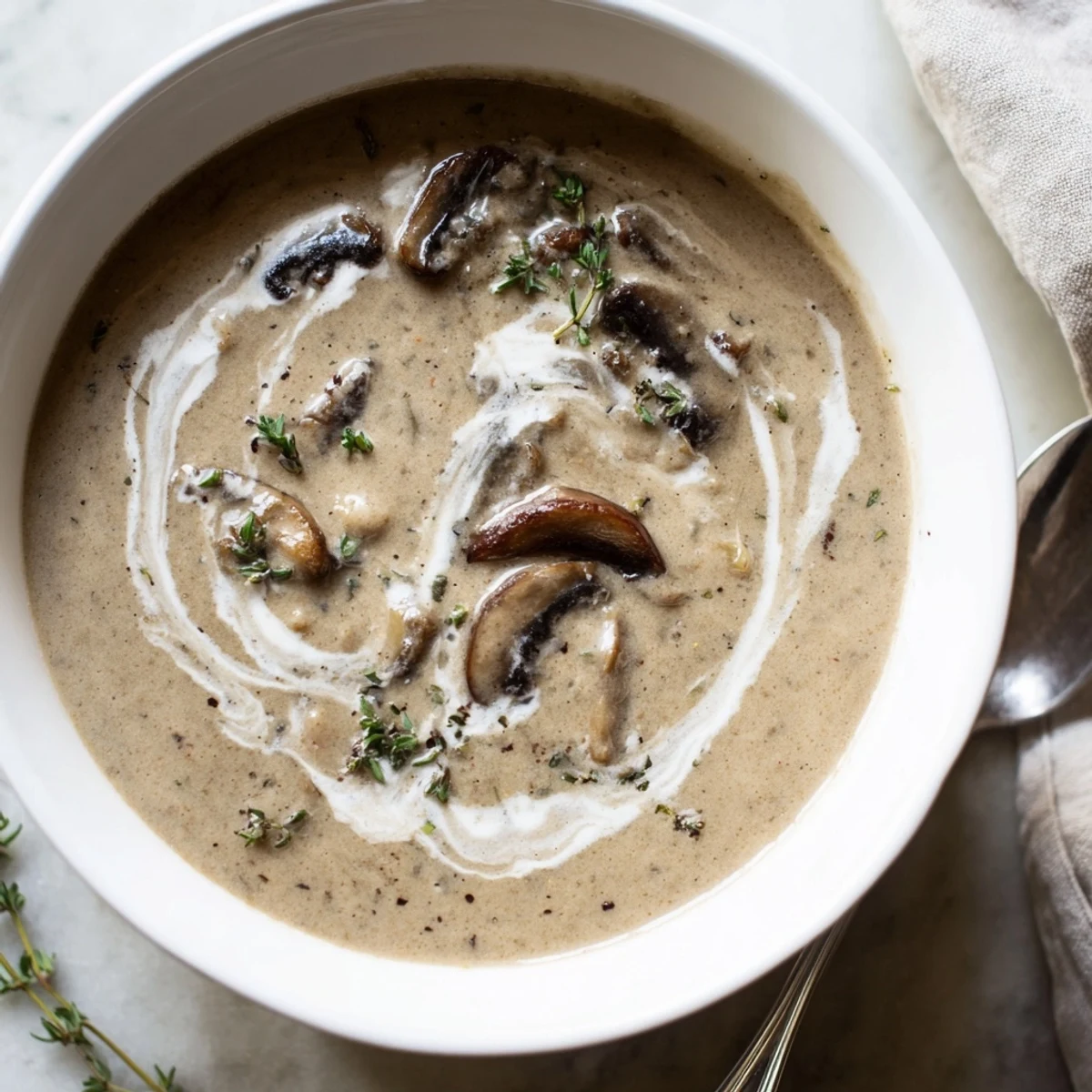
- Ladle the soup into bowls and top each one with a tiny drizzle of cream and a few fresh thyme leaves or sprigs. Serve while it's still steaming.
 Pin This
 This soup became a ritual on difficult days—the kind where I'd come home and just turn on the stove without even thinking about it, knowing that in less than an hour I'd have something warm and complete in front of me. There's honesty in that, and comfort in the repetition.
What Makes This Soup Different
Creamy mushroom soup exists in almost every kitchen tradition, but what sets this one apart is the restraint—there are no heavy spices to mask the mushroom flavor, no cream so thick it becomes cloying. The thyme is there to complement, not compete, and the way the soup comes together feels almost like you're unveiling something that was always there underneath rather than building it from scratch. It's simple enough to make on a Tuesday night, but elegant enough to serve to people you're trying to impress.
Variations Worth Trying
Once you've made this soup a few times and it becomes second nature, you can start playing with it. Wild mushrooms—chanterelles, porcini, shiitake—will deepen the flavor considerably, though they cost more and can be harder to find outside of autumn. Some people swear by a splash of sherry instead of white wine, and honestly, it's wonderful that way too. You can also make it vegan by using good olive oil in place of butter and coconut cream instead of heavy cream; it won't taste identical, but it will taste like its own beautiful thing.
Pairing and Serving
This soup is best served hot, in wide shallow bowls so the cream and thyme garnish can sit on top like tiny jewels. A slice of crusty bread on the side is non-negotiable—you'll want something to dip and soak in that broth. If you're serving it to guests, pour it into the bowls in the kitchen and carry them out; it feels more intentional and special that way. Some people pair it with a glass of Chardonnay, which is lovely, but honestly it's just as good with nothing but time and quiet.
- Serve in bowls warmed in the oven for a few minutes beforehand—it keeps the soup hotter longer.
- Make it the day before if you need to; it reheats gently on the stovetop and sometimes tastes even better after the flavors have had time to settle.
- If you have guests who are dairy-free, you can set aside some soup before adding the cream and finish theirs with a plant-based alternative instead.
 Pin This
 This soup is proof that the best dishes don't need to be complicated—they just need to be made with attention and the kind of care that feels like you're cooking for someone you love. Make it often, and it will become yours in a way that goes deeper than following a recipe.
Recipe FAQs
- → What mushrooms work best for this dish?
-
Cremini or button mushrooms provide a mild, earthy base. Wild mushrooms can be added for a richer flavor complexity.
- → Can I substitute cream in this preparation?
-
Yes, coconut cream or other plant-based alternatives can be used for a dairy-free version without losing the smooth texture.
- → How does fresh thyme influence the flavor?
-
Fresh thyme adds a delicate, herbal aroma and subtle earthiness, complementing the mushrooms beautifully.
- → Is it necessary to blend the mixture completely?
-
Blending creates a smooth consistency, but leaving some texture can enhance mouthfeel based on preference.
- → What cooking tools are recommended?
-
A large pot, sharp knife, immersion blender or countertop blender, and ladle ensure efficient cooking and serving.