
 Pin This
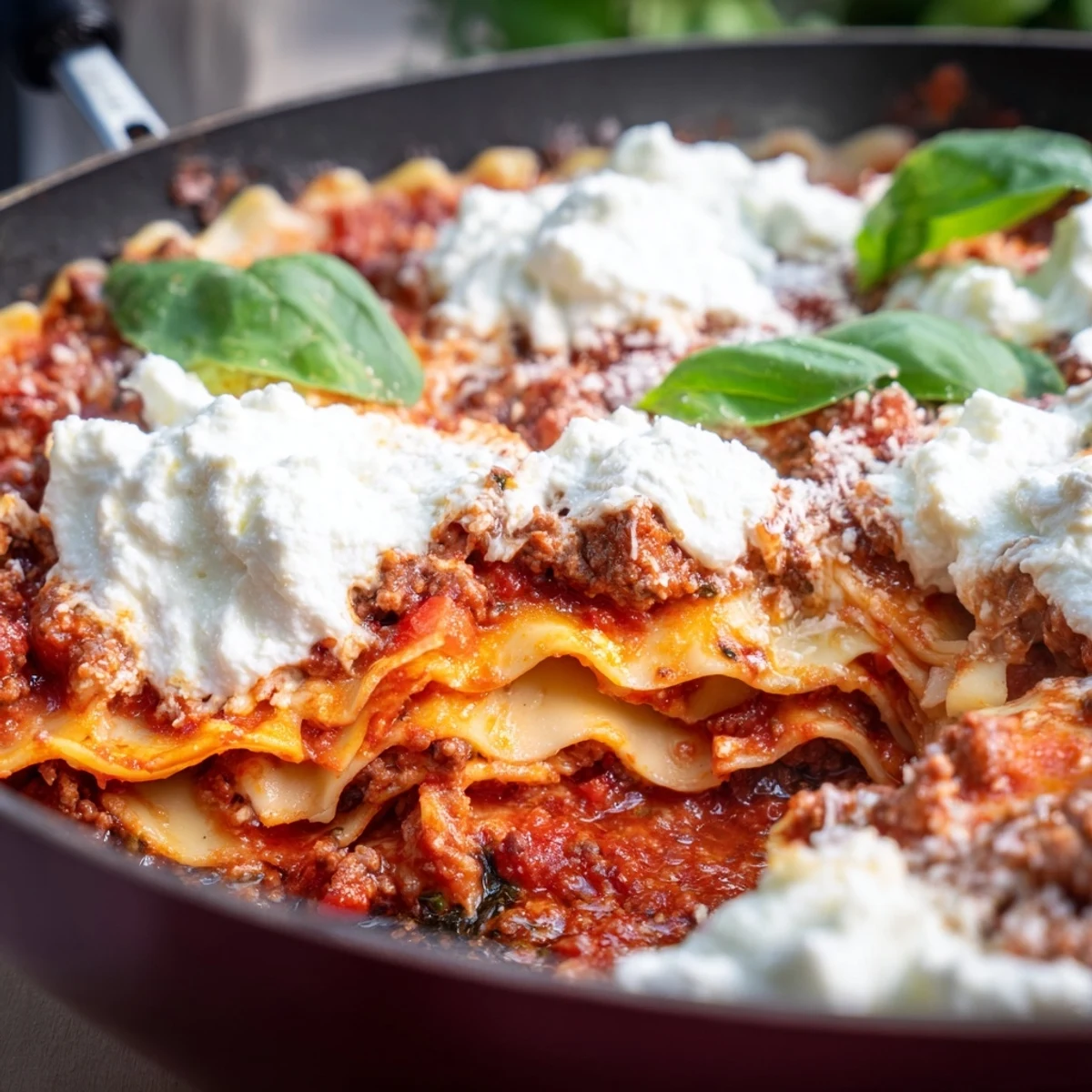
 This skillet version brings all the comfort of traditional baked lasagna to your stovetop in half the time. Broken pasta noodles cook directly in a robust tomato and meat sauce, absorbing flavors while becoming perfectly tender. The finishing touch—dollops of creamy ricotta and a blanket of melted mozzarella and Parmesan—creates that irresistible cheesy, bubbly topping everyone loves.
Perfect for busy weeknights when you want something hearty and satisfying without the oven time. The entire dish comes together in one pan, meaning less cleanup and more time enjoying dinner with family.
The first time I made skillet lasagna was purely out of desperation on a Tuesday when I refused to turn on the oven but desperately needed lasagna in my life. I broke the noodles into pieces, feeling reckless and slightly guilty about abandoning the carefully layered tradition my grandmother taught me.
Last winter my sister discovered this recipe and started making it every Sunday, claiming it was the only thing that got her through exam season. Something about the bubbling cheese and rich tomato sauce made her tiny apartment feel like home.
Ingredients
- Ground beef or Italian sausage: The fat content keeps everything rich and I have learned that slightly fattier beef works better than lean
- Onion and garlic: These need to be finely diced so they disappear into the sauce rather than becoming chunky surprises
- Crushed tomatoes: Whole tomatoes that you crush yourself work beautifully but the canned version saves precious time
- Tomato paste: This little tube concentrates all the tomato flavor and makes the sauce taste like it simmered all day
- Dried oregano and basil: Dried herbs actually work better here than fresh because they hold up to the long cooking time
- Red pepper flakes: Even a tiny pinch wakes up the entire dish without making it actually spicy
- Lasagna noodles: Breaking them feels wrong at first but creates more surface area for sauce to cling to
- Mozzarella cheese: Fresh mozzarella is too wet so go with the kind that comes already shredded
- Parmesan cheese: The salty sharpness cuts through the rich meat sauce
- Ricotta cheese: Room temperature ricotta spreads easier so take it out of the fridge while you cook
Instructions
- Brown the meat:
- Cook the beef or sausage in your deep skillet over medium heat until fully browned, breaking it up with your spoon as it cooks. Drain some fat if there is an excessive amount but leave a little for flavor.
- Soften the aromatics:
- Add the diced onion to the meat and let it cook for about 4 minutes until it is translucent and fragrant. Stir in the garlic for just one minute so it does not turn bitter.
- Build the sauce:
- Pour in the crushed tomatoes and add the tomato paste, oregano, basil, red pepper flakes, salt and pepper. Stir everything together until the tomato paste dissolves completely.
- Add the noodles:
- Break the lasagna noodles into 2-inch pieces right over the pan and push them down into the sauce. Add that splash of water if the sauce looks too thick to coat all the pasta.
- Simmer everything:
- Cover the skillet and turn the heat to medium-low for about 15 minutes. Check occasionally and give it a gentle stir so nothing sticks to the bottom.
- Add the cheeses:
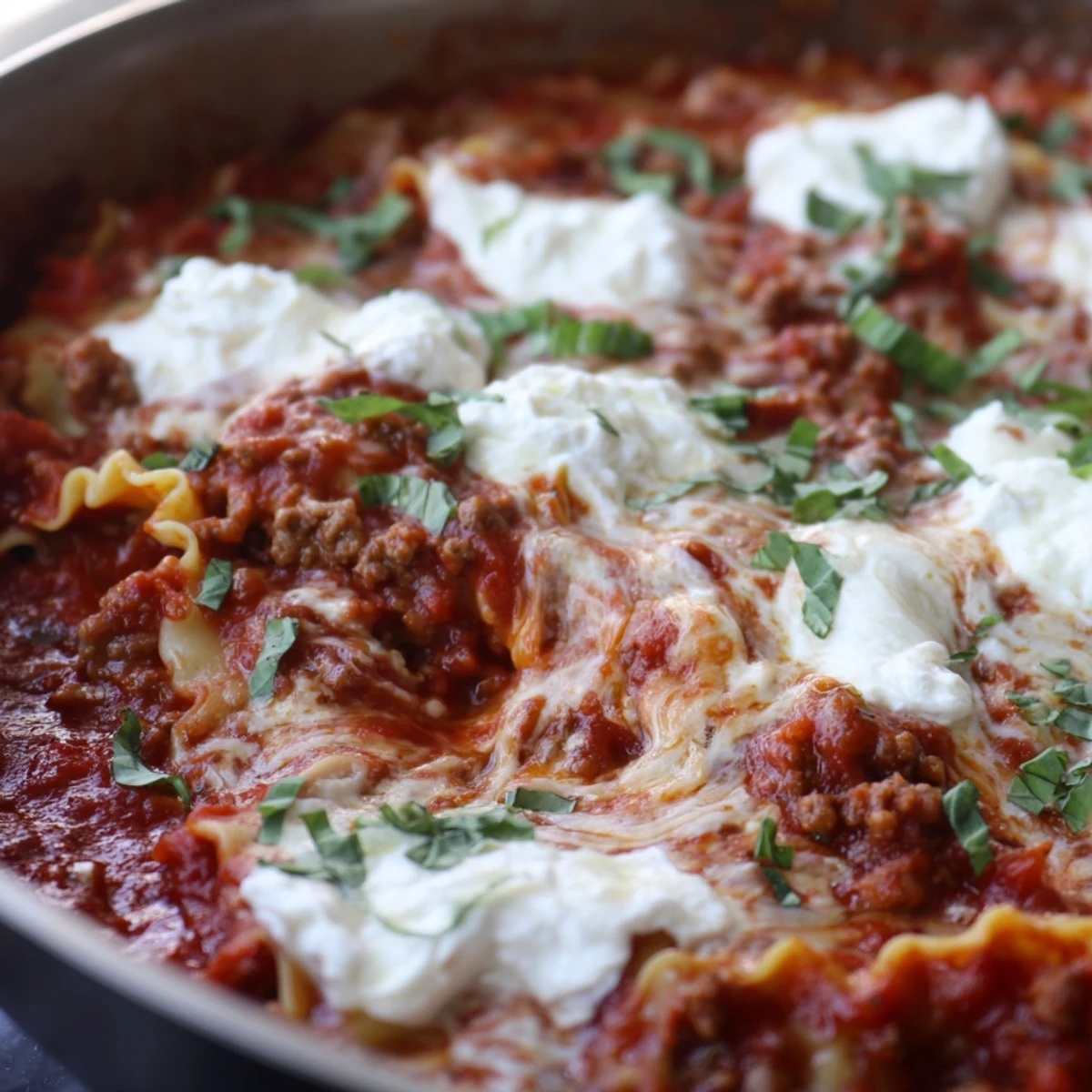
- Drop spoonfuls of ricotta across the top like little islands. Sprinkle the mozzarella and Parmesan over everything.
- Melt the topping:
- Cover the pan again for 3 to 5 minutes until the cheese is completely melted and bubbling. Watch closely so the bottom does not scorch.
- Rest and serve:
- Take the skillet off the heat and let it sit uncovered for 5 minutes. This sets the cheese slightly and makes serving much easier.
 Pin This
 My roommate used to request this whenever she had a bad day at work. She said watching the cheese bubble up through the tomato sauce was somehow therapeutic and the smell filled our whole apartment.
Making It Your Own
The beauty of skillet lasagna is how forgiving it is with substitutions and additions.
Getting The Texture Right
The noodles should be tender but still have a slight bite to them because they will keep cooking in the hot sauce even after you remove the pan from the heat.
Serving Suggestions
A simple green salad with bright vinaigrette cuts through the richness of the cheese and meat. Crusty bread is never a bad idea for soaking up any sauce left in the pan.
- Let the dish sit at least 5 minutes before serving or you will end up with a runny mess
- Grate extra Parmesan at the table because cheese fixes almost everything
- Leftovers reheat beautifully and actually taste better the next day
 Pin This
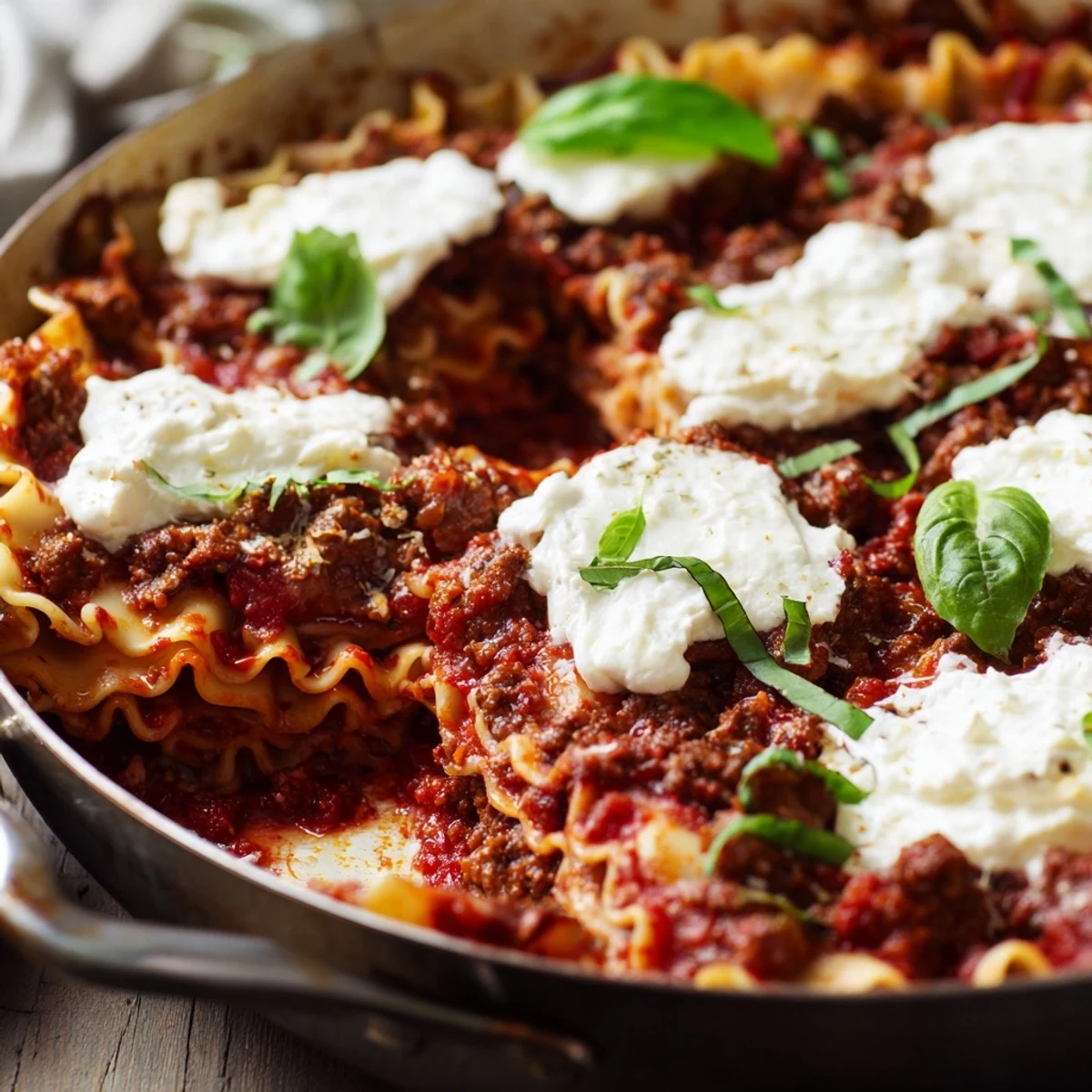
 There is something deeply satisfying about a lasagna that comes together in less than an hour but still tastes like it simmered all afternoon.
Recipe FAQs
- → Can I make this vegetarian?
-
Absolutely. Simply omit the ground beef or sausage and add sautéed mushrooms, zucchini, or spinach for bulk and flavor. You may want to increase the dried herbs to compensate for the loss of meaty seasoning.
- → What type of pasta works best?
-
Traditional lasagna noodles broken into 2-inch pieces work perfectly here. The broken pieces cook evenly and absorb the sauce beautifully. Oven-ready noodles can be used, but reduce the simmering time by about 5 minutes and watch the liquid level closely.
- → Why cover the skillet while cooking?
-
Covering traps steam and heat, ensuring the pasta cooks through evenly and the sauce maintains the right consistency. The cover also helps melt the cheeses evenly without drying out the top layer.
- → Can I assemble this ahead of time?
-
This dish is best enjoyed fresh, as the pasta continues to absorb liquid while sitting. If you need to prep ahead, cook the meat sauce and store it separately, then complete the dish when ready to serve.
- → What wine pairs well with this?
-
A light Italian red wine like Chianti complements the rich tomato sauce and savory beef beautifully. The wine's acidity cuts through the cheese while matching the herbal notes in the sauce.
- → How do I store leftovers?
-
Store cooled leftovers in an airtight container in the refrigerator for up to 3 days. Reheat gently in a skillet over low heat, adding a splash of water if the pasta has absorbed most of the sauce.