
 Pin This
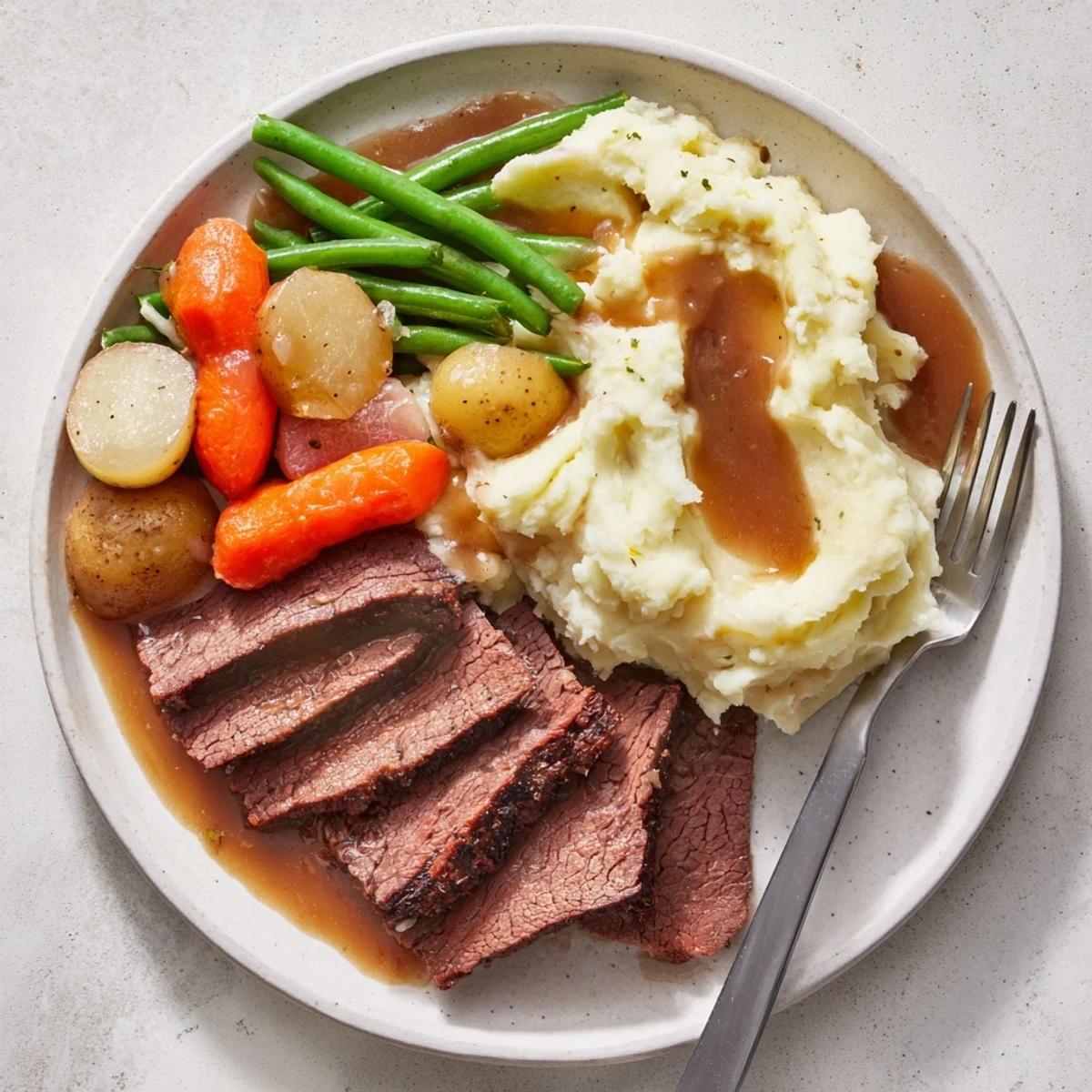
 This hearty Southern classic features fork-tender beef chuck roast slowly braised with onions, carrots, celery, and baby potatoes in a savory beef broth infused with Worcestershire sauce, thyme, and rosemary. The dish creates its own rich gravy, perfectly complemented by creamy buttery mashed potatoes and tender garlic-seasoned green beans. The low-and-slow cooking method transforms tough beef into melt-in-your-mouth tenderness while infusing all components with deep, savory flavors.
The smell of this pot roast hits you before you even walk through the door. My grandmother used to make something similar on Sundays, and the whole house would smell like slow-cooked comfort all day long. I've spent years trying to recreate that feeling in my own tiny apartment kitchen. Some Sunday afternoons, I catch myself standing by the oven just watching it bubble.
Last winter I made this for friends who'd just moved into their first house. We ate around their coffee table because furniture hadn't arrived yet. Nobody said much during dinner except occasional mm-hmm and can you pass the gravy. Sometimes the best meals happen when nothing's fancy and everyone's too tired to be polite.
Ingredients
- Beef chuck roast: This cut transforms from tough to meltingly tender after hours in the oven and has enough marbling to keep everything rich
- Kosher salt and black pepper: Don't skip seasoning the meat generously before searing
- Vegetable oil: You need something with a high smoke point for that proper sear
- Yellow onion: Sliced thick so they don't completely disappear into the sauce
- Garlic: Minced fresh releases more flavor than the pre-chopped stuff
- Carrots and celery: Cut them into large pieces so they survive the long cooking time
- Baby potatoes: These soak up all that flavor while staying intact
- Beef broth and water: The broth adds depth while the water keeps the sodium in check
- Worcestershire sauce: This little secret ingredient adds that umami punch people can't quite identify
- Dried thyme and rosemary: Dried herbs actually work better here since fresh would turn to mush
- Bay leaves: They release their flavor slowly but don't forget to fish them out later
- Cornstarch: The trick to getting that restaurant-style gravy consistency without making a roux
- Russet potatoes: These mash up lighter and fluffier than waxy varieties
- Butter and whole milk: Cold milk and room temperature butter give the smoothest mashed potatoes
- Fresh green beans: Frozen work in a pinch but fresh keep their snap better
Instructions
- Sear the beef until it's deeply browned on every side:
- Get your Dutch oven smoking hot first and don't move the meat around too much. Those brown bits on the bottom become the foundation of your entire flavor profile.
- Sauté the aromatics until fragrant:
- Scrape up any browned bits from the bottom while cooking the onion and garlic. This step releases all that flavor stuck to the pot from searing.
- Add the vegetables and nestle the roast back in:
- Give everything a good stir so the vegetables get coated in all those flavorful juices. Position the beef so it sits mostly submerged.
- Pour in the braising liquid and herbs:
- Bring everything to a gentle simmer on the stovetop before putting it in the oven. This jumpstarts the cooking process and ensures even heat distribution.
- Braise uncovered for the first hour:
- Let it develop some color then cover tightly for the remaining time. The liquid should barely bubble instead of boil aggressively.
- Make the mashed potatoes while the roast finishes:
- Start them in cold salted water so they cook evenly. Warm the milk before adding it so the potatoes stay hot longer.
- Cook the green beans until just tender:
- They should still have a little snap when you bite into them. Overcooked green beans are sad and nobody wants that on their plate.
- Create the gravy from the pan juices:
- Whisk the cornstarch slurry in slowly so you can control the thickness. Let it bubble for a full minute to cook out any raw starch taste.
 Pin This
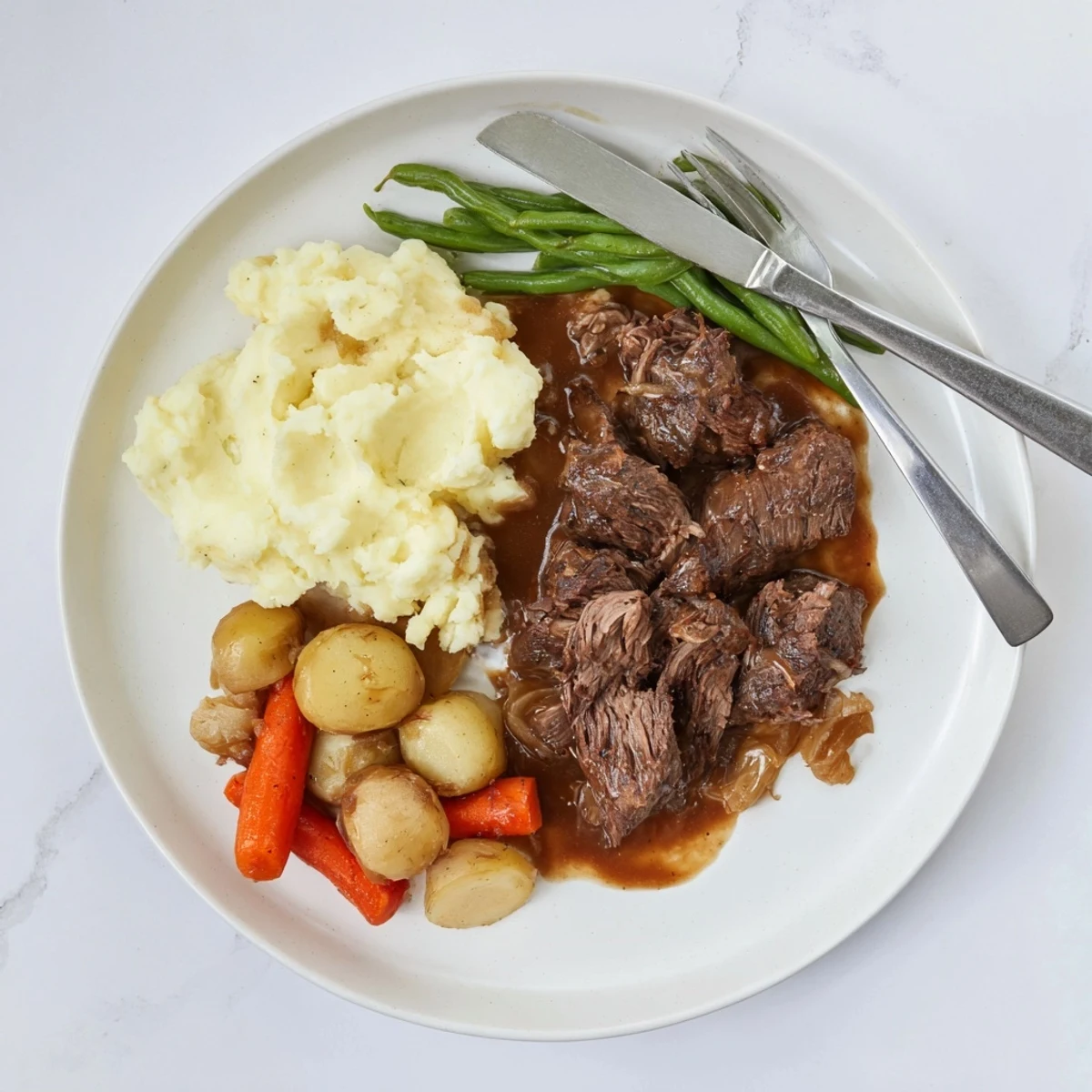
 This was the first meal I cooked for my now-husband when we were dating. He'd mentioned loving pot roast as a kid and I wanted to impress him. The roast turned out perfect but I forgot to make the sides until the last minute. We ate it with just the meat and vegetables, and he still says it was his favorite version because it felt so honest.
Making It Ahead
The pot roast actually tastes better the next day after all the flavors have had time to get to know each other. Make it on Sunday and reheat gently on Monday. The gravy might need a splash of water or broth when reheating. I've learned to make extra just so I can have leftover sandwiches.
Choosing The Right Cut
Chuck roast is the gold standard here but sometimes I find a good deal on boneless short ribs. Both need that long slow cooking time to break down the connective tissue. Ask your butcher to trim some of the excess fat if you prefer a lighter gravy.
Serving Suggestions
Cornbread is the obvious choice but sometimes I serve it over buttered noodles instead of mashed potatoes. A crisp green salad with vinaigrette cuts through all that richness nicely.
- Warm your serving plates in the oven for a few minutes
- Set out extra Worcestershire for people who like it stronger
- Keep some mashed potatoes plain for picky eaters
 Pin This
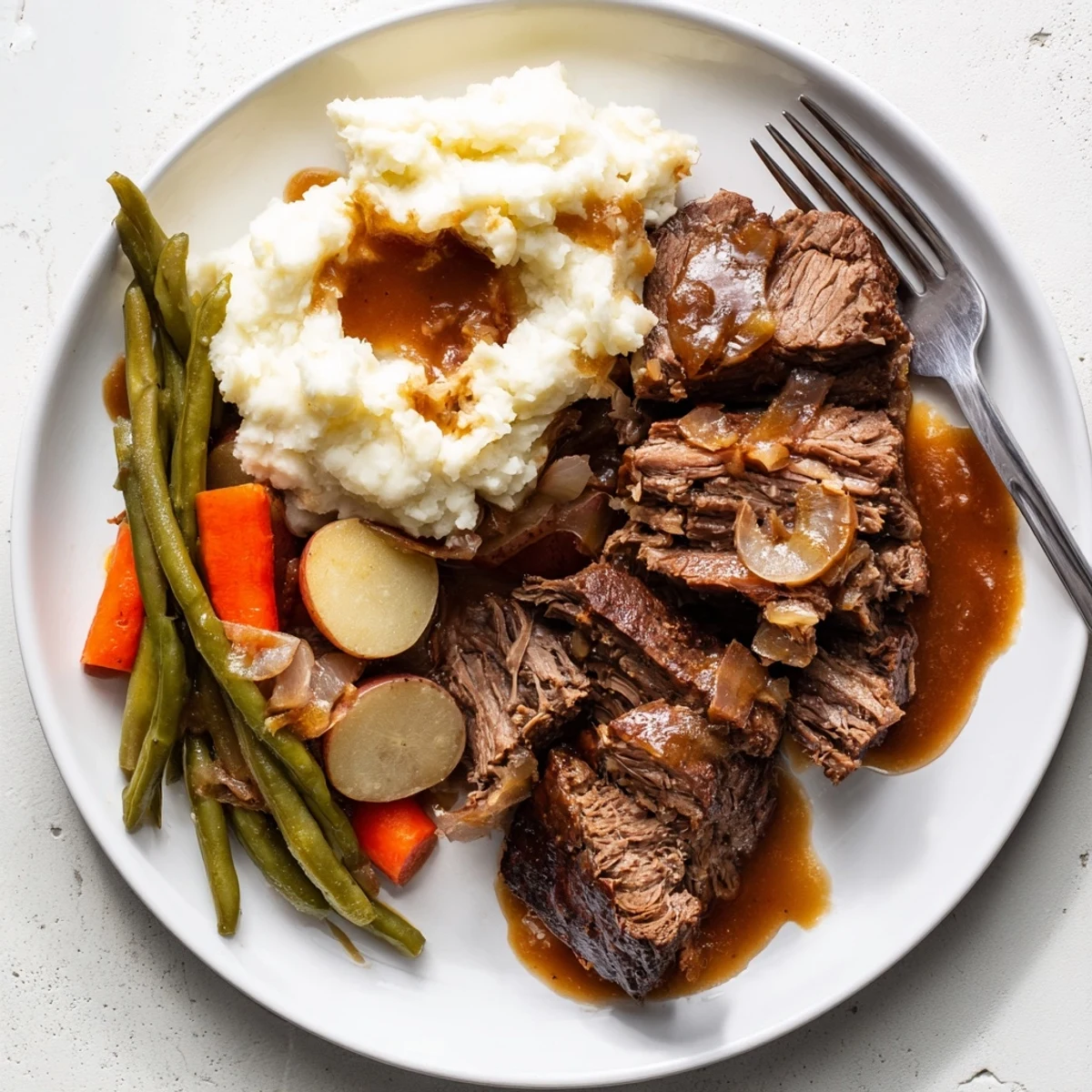
 There's something profoundly satisfying about a meal that takes care of itself in the oven. The house smells wonderful and people feel cared for without any fancy techniques.
Recipe FAQs
- → What cut of beef works best for pot roast?
-
Chuck roast is ideal for pot roasting because it has plenty of marbling and connective tissue that breaks down during slow cooking, resulting in tender, flavorful meat that shreds easily.
- → How long should I cook the pot roast?
-
Braise the roast for 2.5 to 3 hours at 325°F (160°C) until the beef is fork-tender. The meat should easily pull apart when tested with a fork.
- → Can I make this in a slow cooker?
-
Yes, sear the meat first on the stovetop, then transfer everything to a slow cooker. Cook on low for 8-10 hours or high for 4-6 hours until tender.
- → How do I get the gravy to thicken properly?
-
Mix cornstarch with cold water to create a slurry before whisking into the simmering pot juices. This prevents lumps and ensures smooth, even thickening.
- → Can I prepare this dish ahead of time?
-
Pot roast actually tastes better the next day as flavors continue to develop. Prepare the entire dish, refrigerate, and reheat gently before serving. The gravy may need thinning with a splash of broth.
- → What vegetables can I add to the roast?
-
Beyond the classic carrots, celery, and potatoes, you can add parsnips, turnips, or pearl onions during the last hour of cooking for extra depth and variety.