
 Pin This
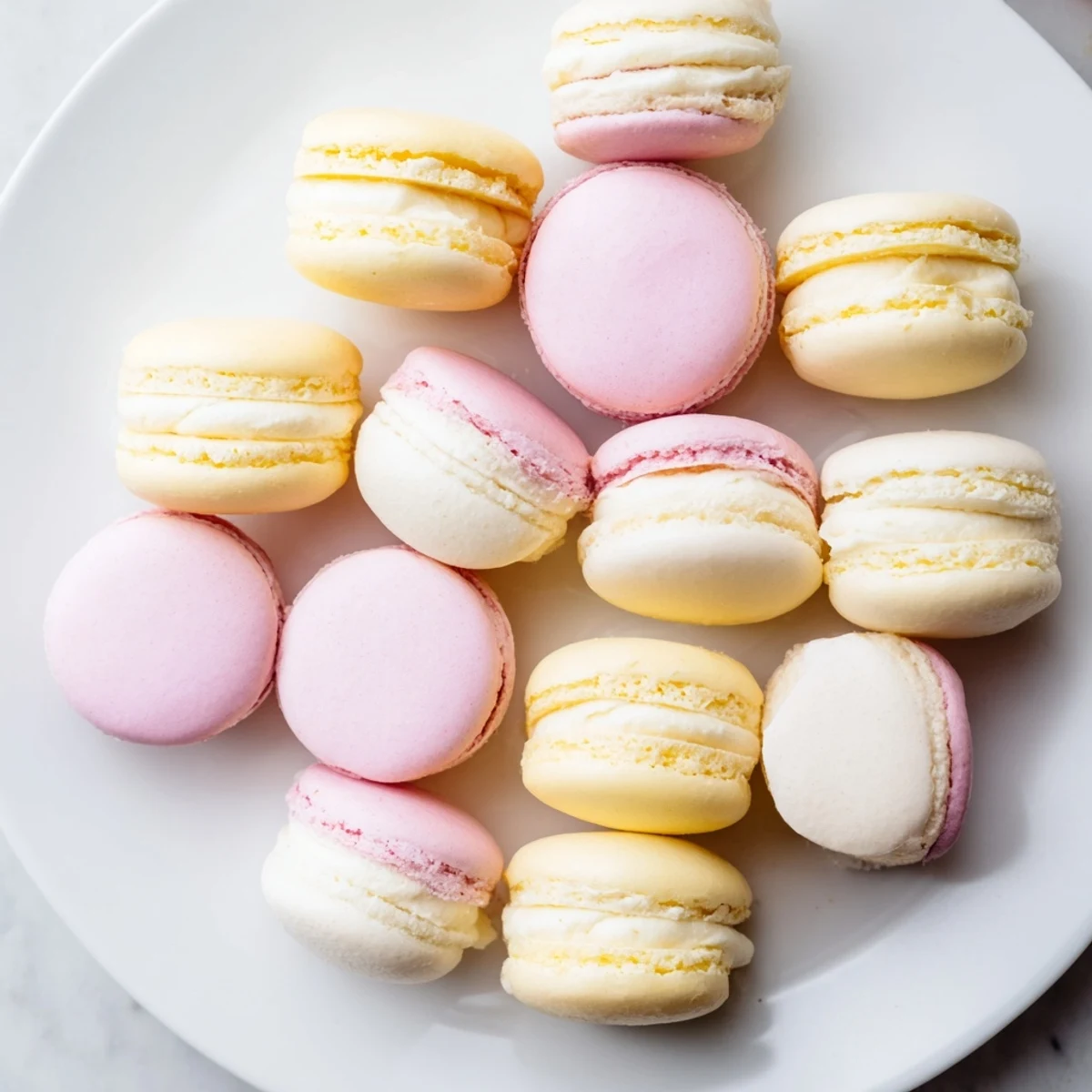
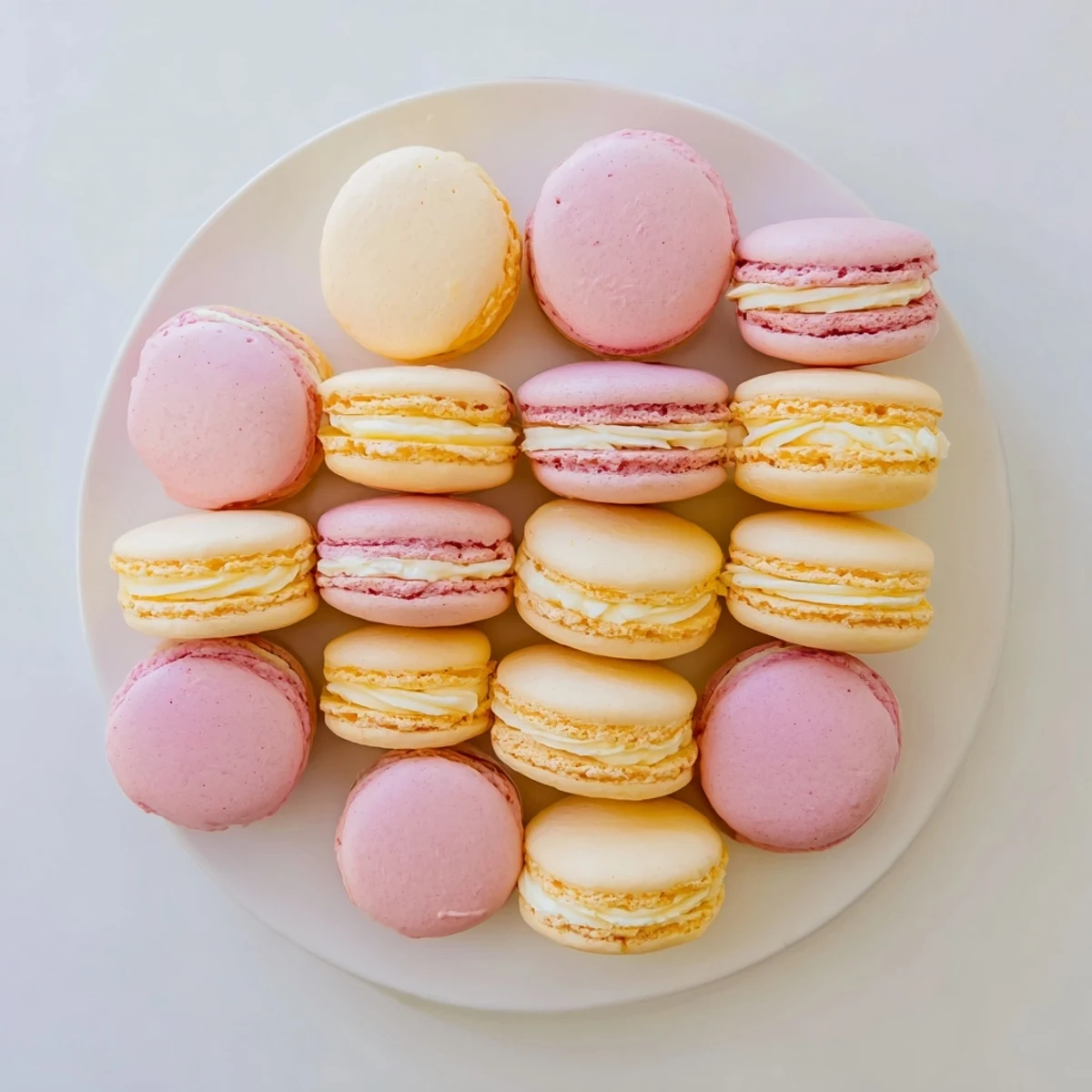
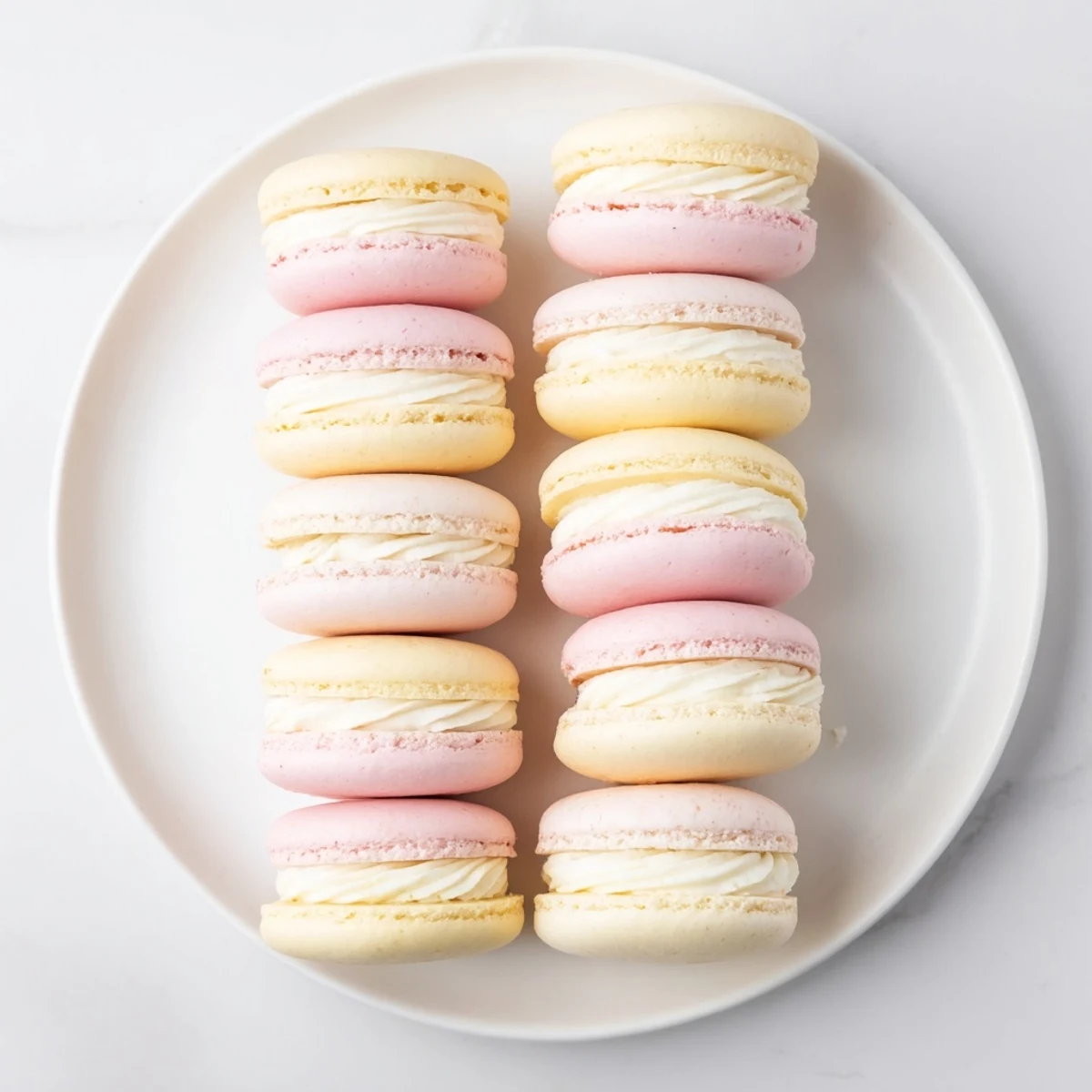
 Craft delicate French macarons with perfectly crisp shells and chewy centers using this foolproof method. The secret lies in properly aged egg whites, precise macaronage technique, and adequate resting time before baking. These almond meringue cookies get sandwiched together with creamy vanilla buttercream, though you can customize with ganache, jam, or flavored frostings. For the most professional results, refrigerate filled macarons overnight—the flavors meld beautifully and texture improves dramatically. They pair wonderfully with Champagne or light white wines for elegant entertaining.
The afternoon light hit my kitchen windows just so, catching the delicate feet on a batch of freshly baked macarons, and I understood why people obsess over these tiny French cookies. My first attempts were hollow shells with no feet, weeping meringue that refused to behave, until I learned that macarons demand patience more than skill. Now I keep aged egg whites in a jar on my counter, ready for when the mood strikes to create something impossibly delicate and sweet.
I brought a tower of raspberry-filled macarons to my sisters birthday last spring, arranged on a vintage cake stand like edible jewels. She texted me the next morning asking for the recipe, admitting she ate three for breakfast with her coffee. Thats the thing about these cookies, they somehow feel fancy and comforting all at once, like wearing pearls with your favorite worn-in sweater.
Ingredients
- 120 g fine almond flour: Sift this thoroughly with the powdered sugar to ensure smooth, lump-free shells
- 200 g powdered sugar: Confectioners sugar gives the macarons their signature melt-in-your-mouth texture
- 100 g aged egg whites: Let egg whites sit at room temperature overnight for better stability and volume
- 100 g granulated sugar: Add this gradually while beating to create a stable, glossy meringue
- 1/4 tsp cream of tartar: This optional ingredient helps stabilize your meringue, especially on humid days
- Gel food coloring: Use gel instead of liquid coloring to avoid thinning your batter
- 100 g unsalted butter: Soften this completely for a smooth, pipeable buttercream filling
- 150 g powdered sugar: Sift before adding to butter for a lump-free buttercream
- 1 tbsp whole milk: Add this gradually to reach your desired filling consistency
- 1 tsp pure vanilla extract: Use pure extract for the best flavor in your buttercream
Instructions
- Prepare your workspace:
- Line two baking sheets with parchment paper or silicone macaron mats, then fit a piping bag with a round tip about 1 cm in diameter
- Sift your dry ingredients:
- Combine almond flour and powdered sugar in a large bowl, sifting together twice and discarding any coarse bits that refuse to pass through
- Create the meringue:
- Beat egg whites in a clean bowl until foamy, add cream of tartar if using, then gradually incorporate granulated sugar until stiff glossy peaks form
- Master the macaronage:
- Fold the dry mixture into your meringue in thirds, pressing the batter against the bowl until it flows in thick ribbons and you can draw a figure 8 without it breaking
- Add color if desired:
- Gently fold in gel food coloring until evenly combined, being careful not to overmix
- Pipe perfect circles:
- Transfer batter to your piping bag and pipe 3 to 4 cm circles onto prepared sheets, leaving about 3 cm of space between each
- Release trapped air:
- Firmly tap the baking sheets on your counter several times, then use a toothpick to pop any visible bubbles for smooth tops
- Let the skin form:
- Let piped shells rest uncovered for 30 to 60 minutes until they develop a skin and no longer stick to your finger when lightly touched
- Bake to perfection:
- Preheat oven to 150°C (300°F) and bake one tray at a time for 12 to 15 minutes, rotating halfway, until feet form and shells lift cleanly
- Cool completely:
- Let shells cool completely on the baking sheets before attempting to remove them
- Prepare the filling:
- Beat butter until creamy, then add powdered sugar, vanilla, salt, and 1 tbsp milk, beating until fluffy and adding more milk as needed
- Assemble your macarons:
- Pair similar-sized shells, pipe buttercream onto the flat side of half, then sandwich with remaining shells and gently press together
- Let them mature:
- Refrigerate macarons in an airtight container for 24 hours before serving, then bring to room temperature for the best texture
 Pin This
 My neighbor once told me she attempted macarons three times before calling me in tears, convinced she lacked some mysterious French baking gene. We made them together in her kitchen, and when those tiny feet appeared in the oven, she actually gasped out loud. Now she sends me photos of her flavor experiments, last week it was lavender with honey buttercream.
Understanding Macaronage
The French term macaronage refers to that crucial folding technique where you incorporate the dry ingredients into the meringue. Undermix and your shells will have pointed tops, overmix and they will spread flat into thin blobs. The perfect batter flows like lava and you can make a figure 8 without it breaking apart.
Customizing Your Flavors
Once you have mastered the basic shell, the flavor possibilities become endless. Mix citrus zest or cocoa powder into the dry ingredients, or infuse your milk for the buttercream with Earl Grey tea, fresh herbs, or coffee beans. Just remember that adding too much moisture can affect your batter consistency.
Troubleshooting Common Issues
Hollow shells usually mean your oven temperature is too low or your meringue was underbeaten. Cracked tops typically indicate that the shells did not rest long enough to form a proper skin. If your macarons have no feet, you may have overmixed the batter or undermixed it.
- Always bake one sheet at a time for even heat distribution
- Use an oven thermometer to ensure accurate temperature
- Let macarons mature in the refrigerator for at least 24 hours before serving
 Pin This
 There is something deeply satisfying about presenting a box of homemade macarons, each one perfect in its imperfect way, knowing you created something that people assume requires professional training. Start with vanilla, then let your imagination guide you toward flavors that make your kitchen smell like a Parisian patisserie.
Recipe FAQs
- → Why do my macarons crack during baking?
-
Cracking typically occurs when shells haven't developed a proper skin before baking. Let piped macarons rest 30-60 minutes until they're dry to the touch. Humidity can also cause cracking, so avoid making them on very damp days.
- → What is macaronage and how do I know when it's done?
-
Macaronage is the folding process that combines almond flour mixture with meringue. The batter is ready when it flows in thick ribbons and you can draw a figure 8 without the batter breaking. Under-mixed causes peaked shells; over-mixed creates flat, spread-out cookies.
- → Why must egg whites be aged?
-
Aging egg whites at room temperature for 24 hours allows them to lose moisture and become more stable. This creates stronger meringue that holds air better, resulting in macarons with proper feet and fewer hollow shells.
- → Can I make macarons without a stand mixer?
-
A hand mixer works perfectly fine for making the meringue. Just ensure your bowl and beaters are completely grease-free. The key is beating until stiff, glossy peaks form—this takes about 5-8 minutes with a hand mixer.
- → Why do macarons need to rest before eating?
-
Refrigerating filled macarons for 24 hours allows moisture to equalize between shells and filling. This creates the characteristic chewy interior and intensifies flavors. Bring to room temperature before serving for the best texture.
- → How do I store macarons and how long do they last?
-
Store filled macarons in an airtight container in the refrigerator for up to one week. They also freeze well for up to three months—thaw overnight in the refrigerator before serving. Unfilled shells freeze beautifully for later use.